Occupational Therapy Centre
Sampoorna Clinic · Rajarhat, Kolkata

Helping Every Child Become Independent, Confident and Capable

At Sampoorna Clinic, our Occupational Therapy Department is dedicated to helping children develop essential skills required for everyday life. We provide structured, child-friendly and individualised therapy to support children in improving their physical, sensory, cognitive and functional abilities.

Our aim is to help every child achieve greater independence in daily activities, participate confidently in school and social environments, and reach their developmental potential.

Through therapeutic activities, structured play and individual attention, we work towards making everyday tasks easier and more meaningful for children.

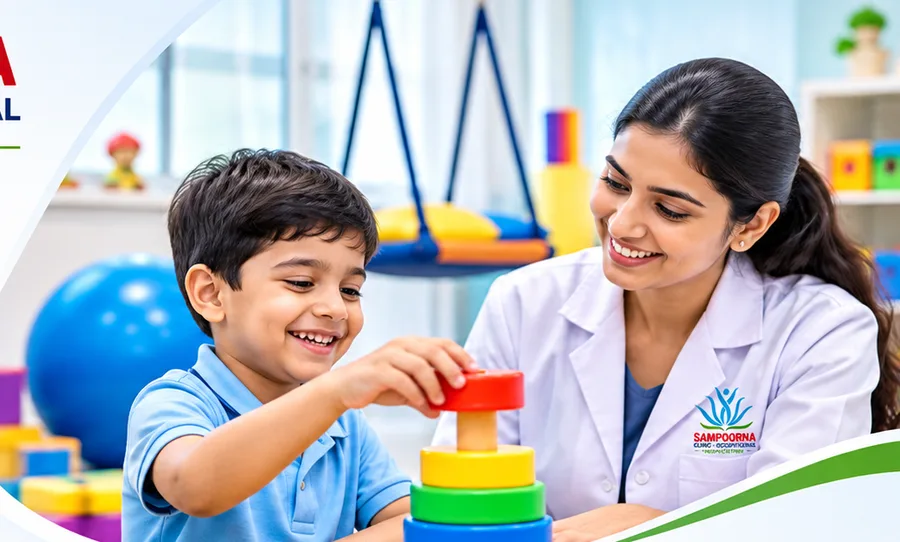
Occupational therapist guiding a smiling child through a ring-stacking activity at Sampoorna Clinic
About Occupational Therapy

What is Occupational Therapy?

Occupational Therapy (OT) is a specialised healthcare service that helps children develop the skills needed to perform everyday activities independently.

These activities include eating, dressing, bathing, writing, playing, learning and interacting with others.

Some children may experience difficulties with coordination, balance, sensory processing, attention, handwriting or self-care activities. Occupational Therapy helps address these difficulties through planned therapeutic interventions based on the child's individual needs.

At Sampoorna Clinic, our approach focuses on understanding each child's strengths and areas of difficulty before developing a personalised therapy programme.

Our services

Our Occupational Therapy Services

1

Sensory Integration Therapy

Some children may find it difficult to process and respond appropriately to sensory information such as touch, sound, movement, taste and visual stimuli. Our sensory-based therapeutic activities aim to help children improve sensory processing, regulation and participation in everyday activities.

Areas addressed:
  • Sensory processing and modulation
  • Tactile sensitivity and sensory awareness
  • Vestibular and proprioceptive processing
  • Body awareness and spatial orientation
  • Sensory regulation and attention
  • Tolerance towards different textures, sounds and movements
2

Fine Motor Skills Development

Fine motor skills involve the use of small muscles of the hands and fingers to perform daily activities.

Therapy focuses on:
  • Improving finger strength and hand coordination
  • Developing proper pencil grip
  • Improving colouring, drawing and writing skills
  • Developing cutting, pasting and craft skills
  • Improving hand-eye coordination
  • Developing finger dexterity and manipulation skills
3

Gross Motor Skills Development

Gross motor skills involve the use of larger muscle groups for activities such as walking, running, jumping and maintaining balance.

Our therapy activities focus on:
  • Balance and coordination
  • Muscle strength and endurance
  • Postural control
  • Bilateral coordination
  • Body awareness
  • Motor planning and movement coordination
4

Activities of Daily Living (ADL)

Developing independence in everyday activities is one of the important goals of Occupational Therapy.

We help children develop skills related to:
  • Eating and feeding independently
  • Dressing and undressing
  • Buttoning and unbuttoning clothes
  • Wearing shoes and socks
  • Personal hygiene
  • Brushing teeth and grooming
  • Toilet training and self-care routines
5

Handwriting and Pre-Writing Skills

Some children may experience difficulty with pencil control, letter formation, spacing and handwriting.

Our intervention focuses on:
  • Pre-writing strokes and patterns
  • Pencil grip and pencil control
  • Letter and number formation
  • Handwriting speed and legibility
  • Visual-motor integration
  • Improving writing posture and endurance
6

Visual Perceptual and Visual Motor Skills

These skills help children understand and respond to visual information and coordinate their hand movements accordingly.

Therapy activities include:
  • Eye-hand coordination
  • Visual tracking
  • Visual discrimination
  • Figure-ground perception
  • Visual memory
  • Copying shapes, patterns and designs
7

Attention, Concentration and Motor Planning

Some children may find it difficult to maintain attention, follow instructions or complete activities independently.

Therapeutic activities aim to improve:
  • Attention and concentration
  • Following instructions
  • Sequencing of activities
  • Planning and organising movements
  • Completing age-appropriate tasks
  • Participation in structured play
Who we help

Conditions that may benefit from Occupational Therapy

Occupational Therapy may be recommended for children experiencing the conditions listed here. Therapy requirements are determined through an individual assessment of each child.

Autism Spectrum Disorder (ASD)Attention Deficit Hyperactivity Disorder (ADHD)Global Developmental Delay (GDD)Developmental Coordination DifficultiesSensory Processing DifficultiesCerebral PalsyDown SyndromeLearning-related functional difficultiesFine and gross motor delaysHandwriting difficultiesDifficulties with self-care and daily activities
Our approach to therapy

Every child is unique and requires individual attention

Our therapy process includes:

1

Initial Assessment

Understanding the child's developmental history, current abilities, strengths and areas requiring support.

2

Individualised Therapy Planning

Developing a personalised therapy plan according to the child's age, developmental level and functional requirements.

3

Structured Therapy Sessions

Providing planned, engaging and child-friendly therapeutic activities to work towards specific developmental goals.

4

Progress Evaluation

Regularly reviewing the child's progress and modifying therapy goals wherever required.

5

Parent Counselling and Guidance

Guiding parents on practical home activities and strategies to encourage skill development in everyday routines.

Why families trust us

Why choose Sampoorna Clinic?

  • Child-friendly and supportive therapy environment
  • Individualised assessment and therapy planning
  • Focus on functional independence and everyday skills
  • Structured and goal-oriented therapy sessions
  • Parent involvement and guidance
  • Focus on overall developmental progress
  • Coordination with other child development professionals whenever required
Is it time?

When should you consult an Occupational Therapist?

Early identification and appropriate intervention can help children develop important functional skills.

Consider consulting an Occupational Therapist if your child:

  • Has difficulty holding a pencil or writing
  • Avoids certain textures, sounds or everyday sensory experiences
  • Has difficulty with eating, dressing or other self-care activities
  • Frequently loses balance or has poor coordination
  • Has difficulty using both hands together
  • Finds it difficult to sit, concentrate or complete age-appropriate activities
  • Has difficulty participating in play or school activities
FAQ

Frequently asked questions

At what age can a child start Occupational Therapy?

Occupational Therapy can be considered during early childhood whenever developmental or functional difficulties are identified. The need for therapy depends on an individual assessment.

How long does an Occupational Therapy session last?

The duration depends on the child's age, attention span, therapy goals and individual requirements. The therapist will recommend an appropriate session duration.

How many sessions does a child require?

The number and frequency of sessions depend on the child's developmental needs, assessment findings and progress.

Does Occupational Therapy help children with Autism?

Yes. Occupational Therapy may help children with Autism develop functional skills related to sensory processing, motor coordination, play, self-care and participation in daily activities.

Can parents participate in therapy?

Yes. Parent involvement is encouraged. Parents receive guidance on activities and strategies that can be practised at home to support the child's development.

Is Occupational Therapy different from Physiotherapy?

Yes. Physiotherapy primarily focuses on movement, physical function, strength and mobility. Occupational Therapy focuses on developing skills required for everyday activities, functional independence and participation. Both services may complement each other.

Book an appointment

Give your child the support to grow and shine!

Every small achievement is a step towards greater independence. Connect with Sampoorna Clinic for an Occupational Therapy assessment and personalised guidance for your child.

Sampoorna Clinic – Supporting Every Child's Journey Towards Independence.